One named fixed-step pipeline
GameplayFixedLoop is the only IFixedTickable entry point. It runs player state, movement, integration, projectiles, world bounds, collisions, and presentation synchronization in an explicit order.
Architecture & delivery case · Unity 2022 LTS
A feature-complete survival game built around custom fixed-step simulation, validated JSON configuration, explicit dependency boundaries, transactional pooled lifecycles, and guarded desktop/mobile delivery.
Dependency map
Four project assemblies separate contracts and physics primitives from JSON/input/platform adapters, gameplay orchestration, and UI. Domain-focused Zenject installers compose them without runtime service lookup.
Key engineering decisions
GameplayFixedLoop is the only IFixedTickable entry point. It runs player state, movement, integration, projectiles, world bounds, collisions, and presentation synchronization in an explicit order.
Plain C# bodies, integrators, circle and segment queries, elastic response, and ToroidalWorld2D own gameplay simulation without Physics2D or dynamic Rigidbody2D behavior.
Player, enemy, and world balance load from JSON. Validation rejects invalid values and missing, unknown, null, duplicate, or incorrectly cased enemy keys before gameplay scenes open.
ObjectPool<T> tracks created instances, provides FIFO reuse, and rejects duplicate returns. EnemyPool centralizes rent, initialization, registration, activation, teardown, and rollback while concrete pools keep type-specific work.
Desktop and mobile strategies use Unity's classic Input API behind one contract. PlayerInputStateProvider samples the selected strategy once per rendered frame for movement and both weapons.
UniTask navigation prevents duplicate transitions and restores UI after failure. Firebase Analytics and AdMob stay behind adapters; missing ad configuration selects a disabled service instead of breaking bootstrap.
Runtime and maintainability
Gameplay avoids scene-wide lookup, repeated component discovery, and temporary hot-loop collections. Cached references, registries, and owned lifecycle operations keep cost and cleanup predictable.
Enemy and projectile registries support custom circle and segment queries; HashSet membership and direct entity mappings prevent duplicate registration and concrete-pool scans.
Enemy and projectile spawn paths reverse completed registrations and return rented views if a later stage fails. SignalBus and event subscriptions have deterministic teardown.
JSON owns extensible runtime balance; ScriptableObjects remain where Unity asset references are appropriate. Unity-facing dependencies are serialized, validated, and cached before gameplay.
Review and delivery
The public repository contains the complete Unity project, configuration, setup notes, and architecture review map. The 21-point architecture review is closed; final Android device and release-build validation remains a separate gate.
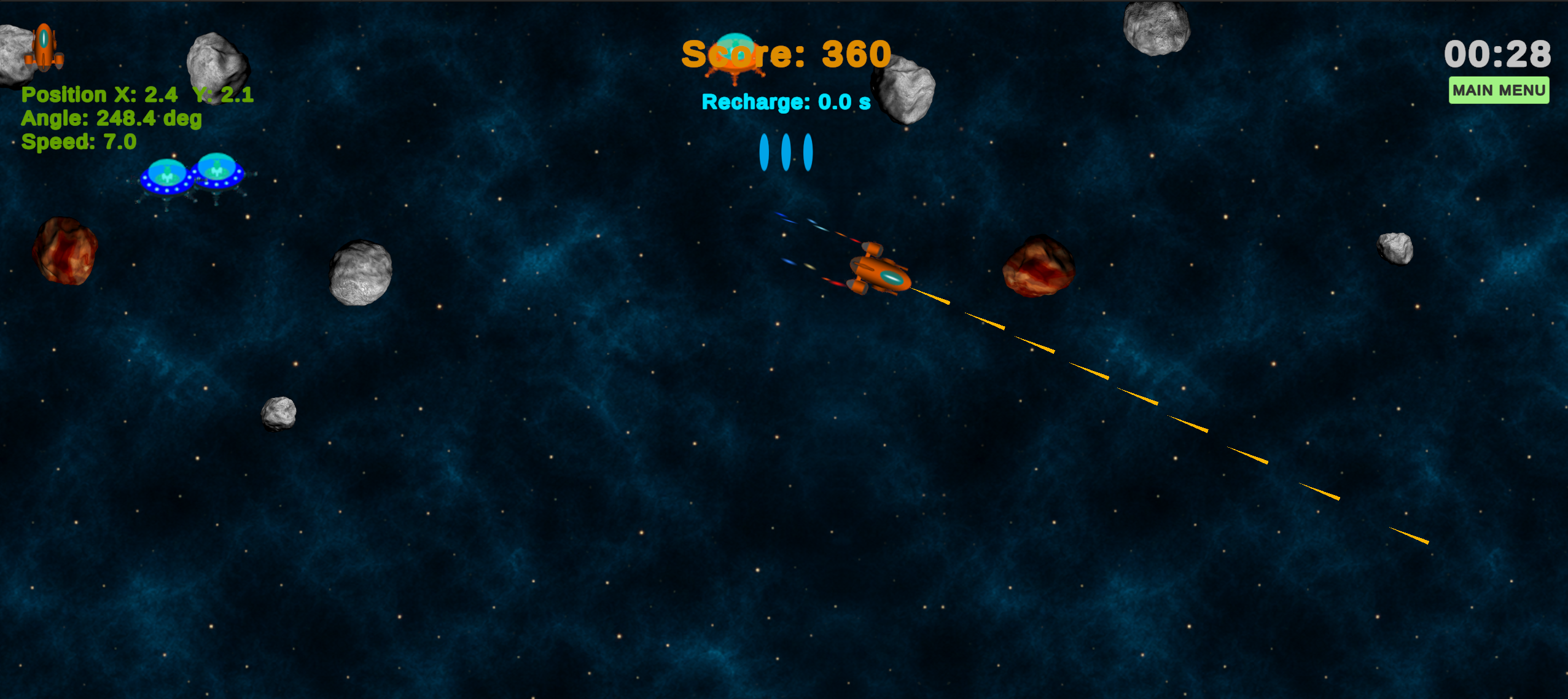
Ship acceleration and inertia, toroidal movement, asteroids and fragments, pursuing UFOs, bullets, multi-target laser, health, invulnerability, scoring, HUD, game over, restart, and menu flow
Unity 2022.3.9f1, C#, custom fixed-step 2D physics, classic Unity Input, Zenject, SignalBus, UniTask, Newtonsoft.Json, UGUI, Firebase Analytics, Google Mobile Ads, Windows, Android
Architecture, lifecycle & validation case
Continue with engine-free domain state, explicit frame orchestration, transactional pooled lifecycles, failure-safe rewards, project-wide tests, and deterministic balance tooling.
Open Last Seed case →